
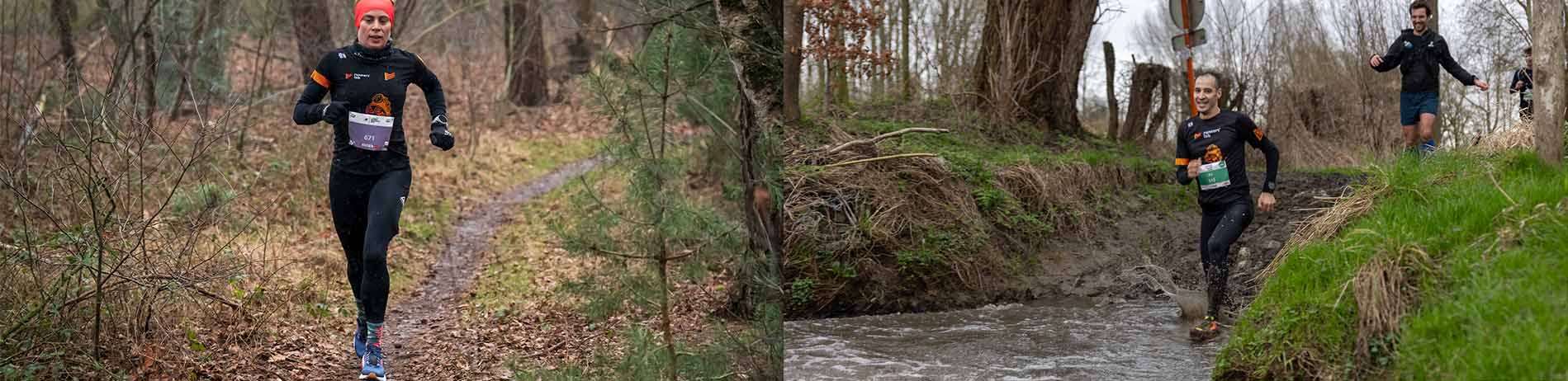
Shoes and accessories for your trail run
From your first trail run in the Ardennes to a multi-day trek in the high mountains - whatever your plans are, having the right gear is absolutely essential. Don't underestimate it, even if you're a regular runner. Trail running requires adjustments, as well as technique and focus. Every step is different, and that's exactly what makes it so much fun.
Runners' lab advisor Senne has competed numerous extraordinary (ultra)trails, including the UTMB (170 km), the Transalpine, the Thames Path (100 miles), and several other +100km races. He's certainly no stranger to clocking serious miles in nature, so who better than him to share personal tips and experiences? You'll find them throughout this blog.
What is trailrunning?
Simply said, trail running means running on unpaved surfaces. Think sand, grass, gravel, rocks, and mud - these take over from asphalt. The big difference from everyday road running? Keeping a steady pace or heart rate is nearly impossible.
Some trails are only recommended for advanced runners, but there are countless routes that are perfect even for those with no trail experience at all.
Tips from Senne: "everyone can trail run - just do it at your own pace. Taking walking breaks is nothing to be ashamed of. In fact, sometimes it's the only option. Give your body time to adjust."
The difference between trail running and road running
The biggest difference between regular road running and trail running? Forget about maintaining a steady pace. Elevation changes, obstacles, and constantly shifting terrain make trail running both challenging and varied.
When the trail gets too steep or the surface too unstable, it's absolutely fine to walk. In fact, trail running puts far less emphasis on your speed or finish time. It's more about endurance, adaptation, and enjoying the experience.
You also need to be much more self-sufficient than during a typical city run. Aids tations and support points are often few, so carrying your own nutrition, hydration, and essential gear is a must.
And finally, navigating a forest trail is much harder than following city streets. A gps watch with gpx is far from a luxury - it's often essential.
Senne's tip: "do your long runs regularly in different locations. It helps you get used to unfamiliar terrain and gives you a chance to test all your gear. Make a habit of walking, too. Strong hikers make the best (ultra-trail runners. And during a race, focus on getting from one aid station to the next, instead of thinking about how far it is to the finish line.
What do I need for a trailrun?
Trailrunning shoes
With regular running shoes, you won't stay upright for long on the slippery trail paths. That's why good trail shoes are a must. They offer better grip thanks to the lug pattern on the outsole. They also protect your feet from (sharp) objects like branches and rocks.
You can also opt for water-repellent trail shoes. These contain a GORE-TEX membrane, which keeps your feet dry in the rain. At the same time, this membrane helps keep your feet warmer - ideal for runners who quickly get cold toes in winter.
A side note about GORE-TEX: its water-repellent nature works both ways. That means water doesn't easily get into your shoes, but it also doesn't get out. If you walk through deep puddles and water enters your shoes from above, your feet will stay wet. Runners' prone to sweaty feet should also keep in mind that GORE-TEX can increase sweating.



Accessories for trailrunning
Trail running requires a completely different set of accessories than when you're 'just' running on the road. Of course, some things are the same - like a comfortable running outfit, energy gels or other sports nutrition, and a cap to protect against the sun.
But since trail runs are often longer - both in distance and effort - certain items can be useful to bring along. Do you like seeking out extreme conditions - think ultratrails of 80+ kilometers, snowy trails, or runs at extreme altitudes? Then it's worth giving extra thought to the right gear: a suitable outfit, a powerful headlamp with excellent battery life, a GPS watch with high accuracy, a quiver for your poles...
A running backpack or belt is a must-have for longer runs. A backpack allows you to easily store an extra jacket, vest, or other gear. It's also the go-to accessory for carrying water. Many running packs have space for a soft reservoir and soft flasks. A more compact alternative is a running belt. Worn around your waist, it's usually spacious enough to hold a soft flask, gels, a phone, and other essentials.
A sports watch that tracks your speed, distance, and heart rate is useful. But even better is a watch with reliable navigation features. In forests or mountains, everything can start to look the same. With GPS on your wrist, you can be sure you're heading in the right direction.
Trail running poles are often seen with experienced trail runners, but they can also be helpful for beginners. They reduce the strain on your legs during steep climbs - which makes sense, since the effort is distributed over four limbs instead of two. They also offer better balance on uneven terrain.
A headlamp is essential for trails that start early in the morning, late in the evening, or for ultratrails where you'll be running through the night.


Running clothes
Whether you're running on paved or unpaved forest trails, a high-quality running outfit will get you to the finish line comfortably. Breathable, sweat-resistant clothing helps keep you cool and fresh during intense efforts.
That said, there is apparel specifically for trail runners - mainly featuring extra pockets or storage options for your trail poles.
The clothing you choose also depends on the weather. That's why our expert Senne always brings a rain jacket on his trailruns: "you never know when it might start raining. And when fatigue kicks in (especially during ultratrails), I really appreciate having an extra layer."
With this clothing and these accessories, you've got a solid base for your trail adventures. Do you have specific questions about trailrunning? Our experts are here to help. Feel free to visit one of our Runners' lab stores for personal advice. You can also get answers to all your questions via the Live WhatsApp.