
What do I need for my trail run?
With tips and tricks from Runners' lab advisor and trail runner Senne.
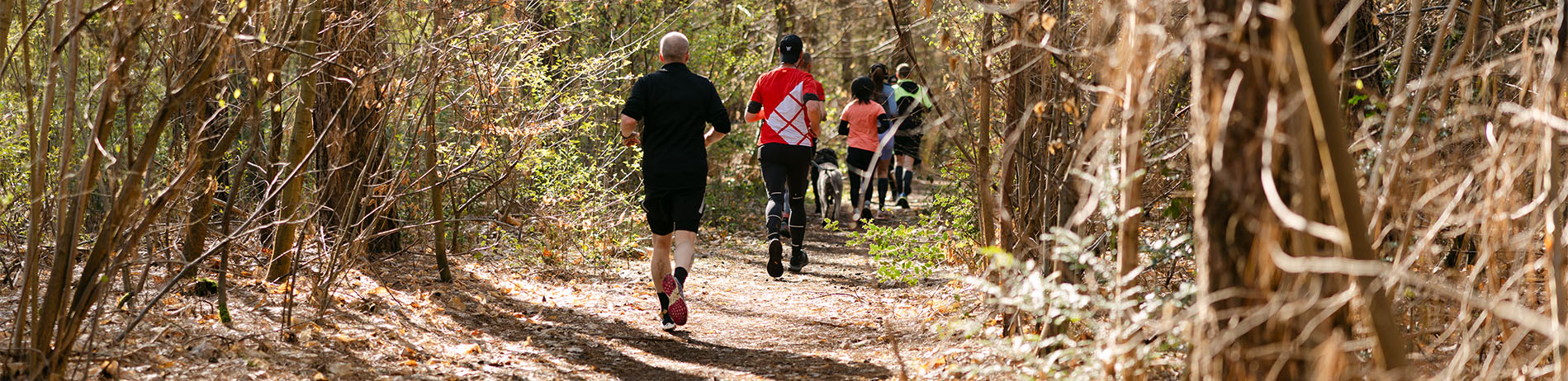
Trail running requires endurance, technique, and concentration. Every step is different. Tree roots, branches, rocks, and mud make it especially challenging. But with the right gear, you make it yourself a bit easier.
Runners' lab advisor Senne has already completed many extraordinary (ultra) trail races, such as the Ultra Trail du Mont Blanc (170km), the Transalpine Run, the Thames Path 100, and several other 100km+ trail events. He never shies away from spending long hours out in nature, making him the perfect person to share his personal experiences and tips.
What is trail running?
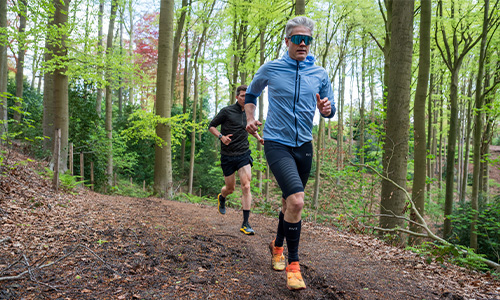
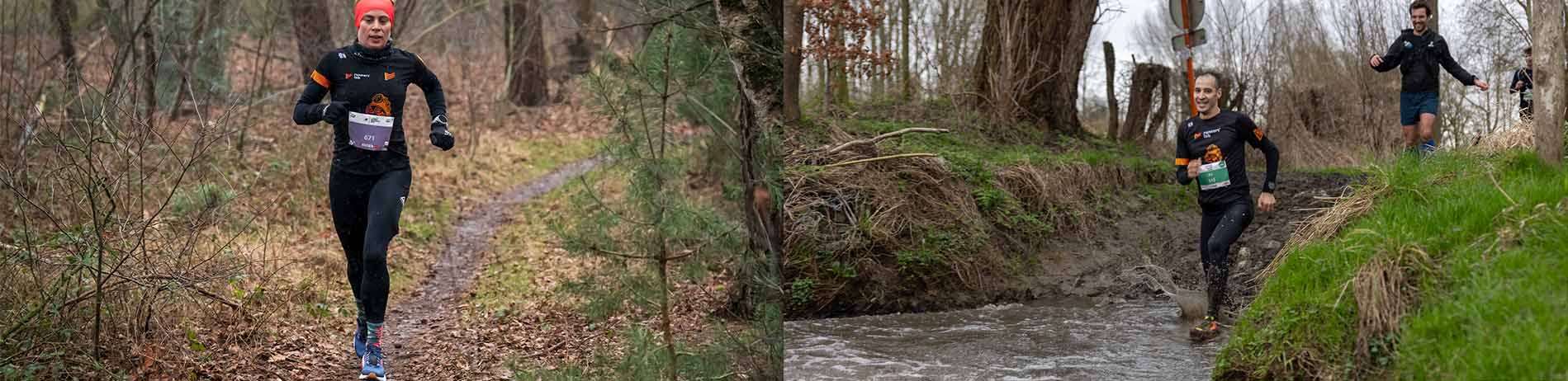
Simply said: trail running is running on unpaved surfaces. This can range from forest paths to open fields or mountain trails. You mainly run in nature, where sand, grass, gravel, rocks, or mud dominate.
The big difference with regular running is clear: running at a constant pace or maintaining the same heart rate is nearly impossible. The unexpected natural obstacles and elevation changes prevent that.
It might sound difficult, but the good news is: anyone can trail run! There are trails that are only recommended for advanced runenrs, but there are countless trail routes that are suitable for runners who are just starting in their trail shoes.
Senne's tip: "everyone can do it, but on their own pace and level. It's no shame to walk. On the contrary, sometimes you just have no other choice. Give your body the time to adapt."
The difference between trail and road running
Forget about running at a constant pace because of the elevation gain, obstacles, and changing terrain. During a road run, you can push yourself to keep running. But when running trail evens, you can absolutely allow yourself to walk. Especially when the climb becomes too steep or the terrain too unstable.
You need to be more self-sufficient. There are fewer aid stations, checkpoints, and support posts, which means you need to carry enough nutrition and essential gear yourself. Think of a safety blanket, first-aid kit, extra clothes, nutrition...
A watch with GPX-function is far from a luxury. Routes through forests are much harder to mark clearly. With GPS navigation on your watch, you can keep track of the route directly from your wrist.
Senne's tip: "Do your long training sessions in different locations regularly. That way, you get used to unfamiliar terrain and can immediately test all your gear as well. Also make a point of doing hikes and long walks: good hikers make the best (ultra) trail runners. During the trail event, focus on running from checkpoint to checkpoint instead of concentrating on the total distance left."
What do I need for a trail run?
Running is running, you might think. Nothing is less true. Trail running requires a few specific accessories to cross the finish line successfully.
Senne's basic gear setup always consists of five essential items. Depending on the distance and level of the trails, he carries additional equipment.
- Running vest (Senne uses the Salomon Advanced Skin 12)
- Rain jacket
- Poles (Senne prefers Leki poles)
- Trail running shoes
- Nutrition
Trail running shoes
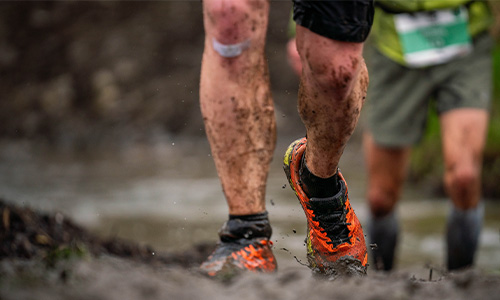
Trail running shoes offer better grip thanks to the lugs on the outsole. They also protect your feet from (sharp) objects like branches and stones.
You can also opt for water-resistant trail shoes. These feature the GORE-TEX membrane, which keeps your feet dry in wet conditions such as rain or puddles. The membrane also keeps your feet warmer, making it ideal for runners who suffer from cold toes in winter.
A small note about GORE-TEX shoes: the water-resistant features works in both ways. Water can't easily enter the shoe, but it also can't easily escape. If you walk through deep puddles and water finds it way into the shoe from the top, there's a good chance your feet will stay wet for a long time.
Runners who are prone to sweaty feet should also keep in mind that GORE-TEX can cause sweating.
A running outfit
Whether you're running on paved asphalt or over unpaved forest paths, a quality running outfit will get you to the finish line more comfortably. Breathable, sweat-resistant clothing ensures that your stay fresh and cool during your intense efforts.
The clothing you choose is largely determined by the weather. Still, Senne always brings a rain jacket on his trail runs. "You never know when it's going to rain. And when fatigue starts to kick in, I really appreciate having an extra layer as well."
In summer, it's best to go for lightweight clothing. A pair of shorts and a short-sleeve shirt are the logical choice. Even within that, there are many options. Opt for a breathable material that offers enough ventilation.



In winter, you'll need more than just shorts and a tee. To keep yourself warm, it's best to wear some extra layers. You can use the three-layer system: start with a baselayer. As a second layer, choose a shirt that is slightly less snug and designed for insulation. These two layers might be enough, but in case of wind, rain, or snow, a third layer can help. A (waterproof) running jacket will protect you from the cold, wind, and rain.


Accessories for trail runners
You might not expect it, but trail running requires a very different range of accessories compared to road running. Some things are similar, such as comfortable running clothes, energy gels or others ports nutrition, a cap to protect from the sun... However, due to the typically longer distances and thus longer efforts, as well as the varying terrains, trail running requires additional accessories.
A hydration vest is a must-have for the longer trail runs. It allows you to easily store an extra jacket, vest, or other items for the journey. It's also the perfect accessory to carry water. Many running packs have space for a soft reservoir, keeping you hydrated while running.
A running belt is a more compact alternative to a running backpack. Worn around your waist, it's usually roomy enough to store a soft flask, gels, and possibly a phone.
A sports watch that displays your speed, distance, and heart rate is useful but not essential. What can help, however, is a sports watch with good navigation. In the woods or mountains, every road and path look the same. You can rely on trail markers, but with a GPS on your wrist, you'll always be sure you're heading in the right direction.
A running light is especially essential if you're taking on an ultratrail. These often start very early and go on until late hours. We don't need to tell you that there are no streetlights deep in to woods. A chest or head lamp that provides your own light beam is a great addition.
Poles are commonly used by experienced trail runners, but they can also be helpful for beginners. They reduce the strain on your legs when running up steep inclines. This makes sense, as the load is spread over four limbs instead of two. It also provides more balance on uneven paths.
With these clothes and accessories, you've definitely laid the foundation for your trail adventures. Do you enjoy seeking out extreme conditions? We're talking about the +80km ultratrails, trails in snow, or at extreme altitudes... In that case, think carefully about the appropriate clothing, a strong running slight with excellent battery life, a watch with precise GPS, and a quiver for your trekking poles.
At Runners' lab, we have a number of advisors who have already taken on such ultra trails. They can guide you like no other and advice you, based on their personal experiences.
Upcoming trail events

What do I need for my trail run?
Start to trail
Trail running requires endurance, technique, and concentration. Every step is different. Tree roots, branches, rocks, and mud make it especially challenging. But with the right gear, you make it yourself a bit easier.
Runners' lab advisor Senne has already completed many extraordinary (ultra) trail races, such as the Ultra Trail du Mont Blanc (170km), the Transalpine Run, the Thames Path 100, and several other 100km+ trail events. He never shies away from spending long hours out in nature, making him the perfect person to share his personal experiences and tips.
What is trail running?
Simply said: trail running is running on unpaved surfaces. This can range from forest paths to open fields or mountain trails. You mainly run in nature, where sand, grass, gravel, rocks, or mud dominate.
The big difference with regular running is clear: running at a constant pace or maintaining the same heart rate is nearly impossible. The unexpected natural obstacles and elevation changes prevent that.
It might sound difficult, but the good news is: anyone can trail run! There are trails that are only recommended for advanced runners, but there are countless trail routes that are suitable for runners who are just starting in their trail shoes.
Senne's tip: "everyone can do it, but on their own pace and level. It's no shame to walk. On the contrary, sometimes you just have no other choice. Give your body the time to adapt."
The difference between trail and road running
Forget about running at a constant pace because of the elevation gain, obstacles, and changing terrain. During a road run, you can push yourself to keep running. But when running trail evens, you can absolutely allow yourself to walk. Especially when the climb becomes too steep or the terrain too unstable.
You need to be more self-sufficient. There are fewer aid stations, checkpoints, and support posts, which means you need to carry enough nutrition and essential gear yourself. Think of a safety blanket, first-aid kit, extra clothes, nutrition...
A watch with GPX-function is far from a luxury. Routes through forests are much harder to mark clearly. With GPS navigation on your watch, you can keep track of the route directly from your wrist.
Senne's tip: "Do your long training sessions in different locations regularly. That way, you get used to unfamiliar terrain and can immediately test all your gear as well. Also make a point of doing hikes and long walks: good hikers make the best (ultra) trail runners. During the trail event, focus on running from checkpoint to checkpoint instead of concentrating on the total distance left."
What do I need for a trail run?
Running is running, you might think. Nothing is less true. Trail running requires a few specific accessories to cross the finish line successfully.
Senne's basic gear setup always consists of five essential items. Depending on the distance and level of the trails, he carries additional equipment.
- Running vest (Senne uses the Salomon Advanced Skin 12)
- Rain jacket
- Poles (Senne prefers Leki poles)
- Trail running shoes
- Nutrition
Trail running shoes
The most important thing while running is your shoes. With road running shoes, you won't stay up on the slippery trail paths. Good trail running shoes are therefore a must.
Trail running shoes offer better grip thanks to the lugs on the outsole. They also protect your feet from (sharp) objects like branches and stones.
You can also opt for water-resistant trail shoes. These feature the GORE-TEX membrane, which keeps your feet dry in wet conditions such as rain or puddles. The membrane also keeps your feet warmer, making it ideal for runners who suffer from cold toes in winter.
A small note about GORE-TEX shoes: the water-resistant features works in both ways. Water can't easily enter the shoe, but it also can't easily escape. If you walk through deep puddles and water finds it way into the shoe from the top, there's a good chance your feet will stay wet for a long time.
Runners who are prone to sweaty feet should also keep in mind that GORE-TEX can cause sweating.
A running outfit
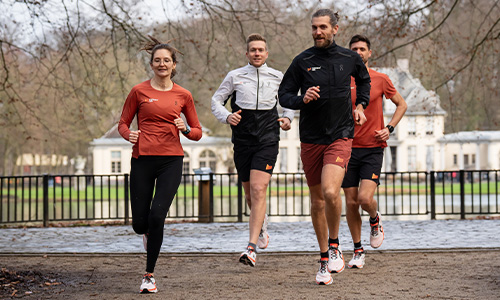
Whether you're running on paved asphalt or over unpaved forest paths, a quality running outfit will get you to the finish line more comfortably. Breathable, sweat-resistant clothing ensures that your stay fresh and cool during your intense efforts. The clothing you choose is largely determined by the weather. Still, Senne always brings a rain jacket on his trail runs. "You never know when it's going to rain. And when fatigue starts to kick in, I really appreciate having an extra layer as well."
In summer, it's best to go for lightweight clothing. A pair of shorts and a short-sleeve shirt are the logical choice. Even within that, there are many options. Opt for a breathable material that offers enough ventilation.
In winter, you'll need more than just shorts and a tee. To keep yourself warm, it's best to wear some extra layers. You can use the three-layer system: start with a baselayer. As a second layer, choose a shirt that is slightly less snug and designed for insulation. These two layers might be enough, but in case of wind, rain, or snow, a third layer can help. A (waterproof) running jacket will protect you from the cold, wind, and rain.
Accessories for trail runners
You might not expect it, but trail running requires a very different range of accessories compared to road running. Some things are similar, such as comfortable running clothes, energy gels or others ports nutrition, a cap to protect from the sun... However, due to the typically longer distances and thus longer efforts, as well as the varying terrains, trail running requires additional accessories.
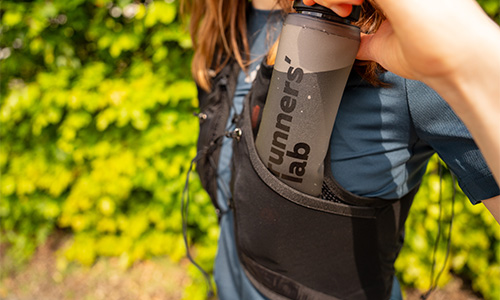
A hydration vest is a must-have for the longer trail runs. It allows you to easily store an extra jacket, vest, or other items for the journey. It's also the perfect accessory to carry water. Many running packs have space for a soft reservoir, keeping you hydrated while running.
A running belt is a more compact alternative to a running backpack. Worn around your waist, it's usually roomy enough to store a soft flask, gels, and possibly a phone.
A sports watch that displays your speed, distance, and heart rate is useful but not essential. What can help, however, is a sports watch with good navigation. In the woods or mountains, every road and path look the same. You can rely on trail markers, but with a GPS on your wrist, you'll always be sure you're heading in the right direction.
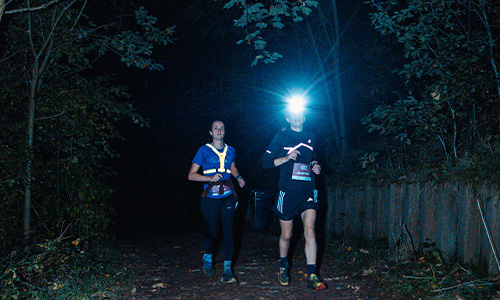
A running light is especially essential if you're taking on an ultratrail. These often start very early and go on until late hours. We don't need to tell you that there are no streetlights deep in to woods. A chest or head lamp that provides your own light beam is a great addition.
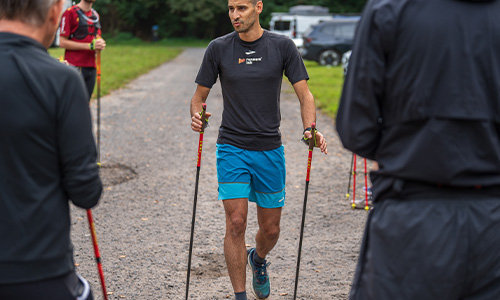
Poles are commonly used by experienced trail runners, but they can also be helpful for beginners. They reduce the strain on your legs when running up steep inclines. This makes sense, as the load is spread over four limbs instead of two. It also provides more balance on uneven paths.
With these clothes and accessories, you've definitely laid the foundation for your trail adventures. Do you enjoy seeking out extreme conditions? We're talking about the +80km ultratrails, trails in snow, or at extreme altitudes... In that case, think carefully about the appropriate clothing, a strong running slight with excellent battery life, a watch with precise GPS, and a quiver for your trekking poles.
At Runners' lab, we have a number of advisors who have already taken on such ultra trails. They can guide you like no other and advice you, based on their personal experiences.